 Save
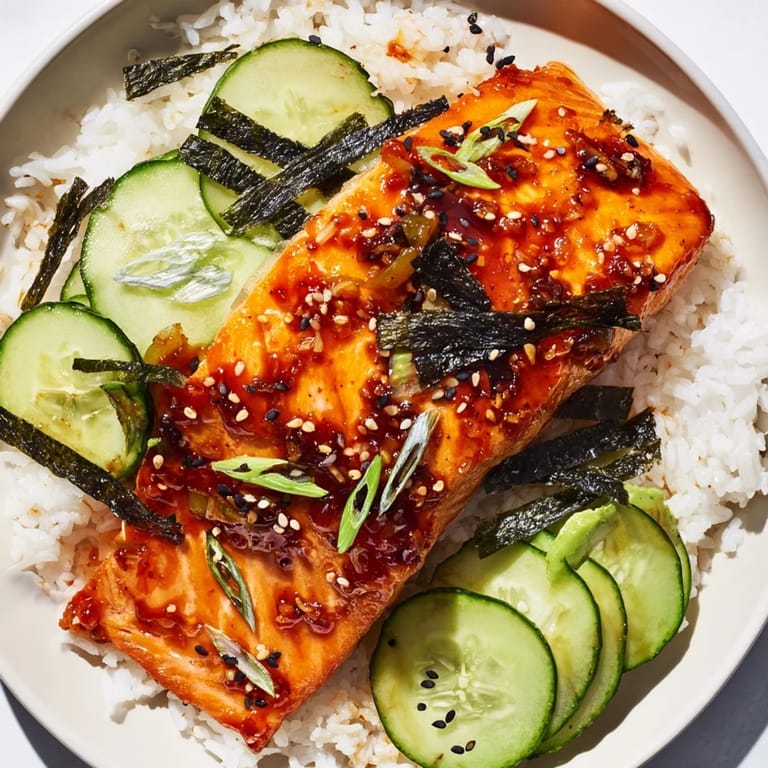
Save I discovered this bowl on a quiet Tuesday afternoon while scrolling through videos, and something about the combination of sticky glaze and fresh toppings made me pause. The next day, I had salmon in the fridge and decided to try it, not expecting much—but that first bite of the sweet-spicy orange gochujang coating against flaky salmon changed everything. Now it's become my go-to when I want something that feels restaurant-quality but doesn't require much fuss, and honestly, it never disappoints.
I made this for my partner on a Friday night, and they kept going back for just one more bite until the bowl was empty. There's something about serving it warm in a regular bowl that makes it feel both casual and special at the same time, like you're sharing a secret from a favorite restaurant.
Ingredients
- Salmon fillets (150 g each): Look for fillets with a nice rosy color and firm texture—the salmon will cook gently in the oven and stay tender, especially if you don't skip checking it at the 12-minute mark.
- Gochujang: This Korean chili paste is the soul of the glaze, bringing heat and umami that you simply can't replicate with other ingredients, so don't skimp on quality.
- Fresh orange juice: Squeeze your own if you can—the brightness cuts through the richness of the salmon and balances the heat beautifully.
- Soy sauce: A good soy sauce (not the cheap stuff) makes a noticeable difference in depth and flavor.
- Honey: This sweetens the glaze and helps it caramelize slightly under the broiler, creating that sticky finish everyone loves.
- Rice vinegar: A small splash adds tang that brightens the whole dish without overpowering it.
- Toasted sesame oil: Use just the right amount—too much overpowers, but too little and you miss the nutty fragrance.
- Fresh ginger and garlic: Minced fine, these add warmth and complexity that transform the glaze from good to unforgettable.
- Short-grain rice: The slight stickiness holds the bowl together and absorbs the glaze beautifully.
- Cucumber, avocado, nori, and sesame seeds: These toppings provide contrast and freshness—each one serves a purpose, from crunch to creaminess.
Tired of Takeout? 🥡
Get 10 meals you can make faster than delivery arrives. Seriously.
One email. No spam. Unsubscribe anytime.
Instructions
- Set the stage:
- Preheat your oven to 400°F and line a baking tray with parchment paper so the salmon won't stick. This small step saves you cleanup and makes the whole process smoother.
- Season the salmon:
- Pat your salmon fillets dry with paper towels, then sprinkle both sides lightly with salt and pepper. Dry salmon is key to getting a nice, even glaze.
- Make the magic glaze:
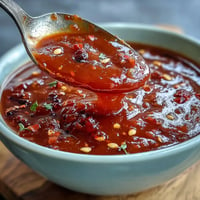
- Whisk together gochujang, fresh orange juice, soy sauce, honey, rice vinegar, sesame oil, ginger, and garlic in a small bowl until smooth. The mixture should smell incredible at this point—that's how you know you're on the right track.
- First glaze coat:
- Brush about half the glaze over the salmon fillets using a pastry brush, coating them evenly. Save the rest for after they cook.
- Bake gently:
- Bake for 12 to 14 minutes, checking around the 12-minute mark to see if the salmon flakes easily with a fork. Salmon cooks faster than you think, so don't walk away completely.
- Prepare your toppings:
- While the salmon bakes, cook your rice if you haven't already, slice the cucumber paper-thin, cube the avocado, and arrange everything near your bowls. This way you're ready to assemble the second the salmon comes out.
- Get sticky (optional broil):
- If you want that extra-caramelized finish, brush the remaining glaze on the hot salmon and broil it for 1 to 2 minutes until it's sticky and slightly darkened. Watch it carefully because broilers can surprise you.
- Assemble with intention:
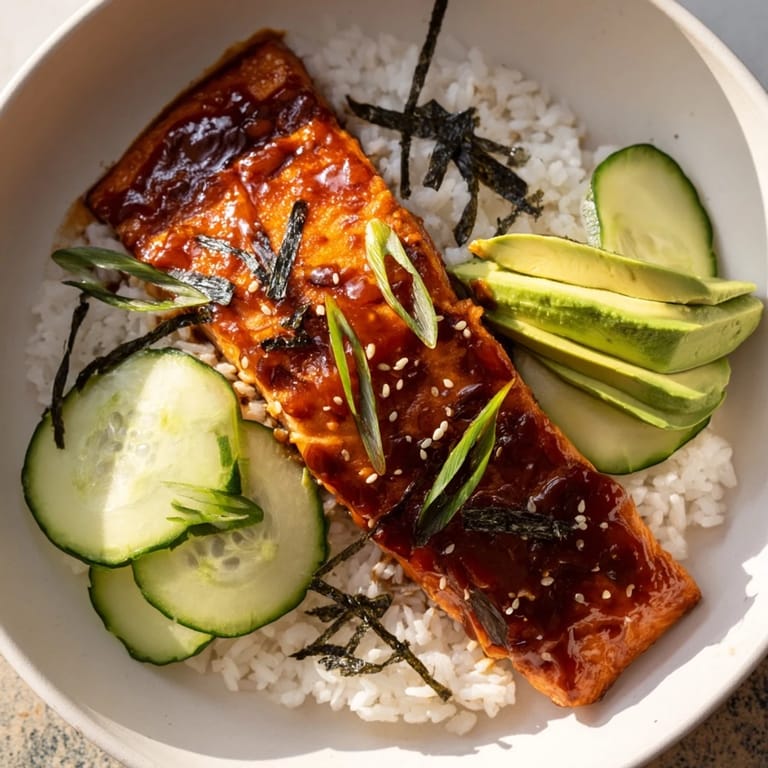
- Divide warm rice between two bowls, place a salmon fillet in the center, then arrange cucumber slices, avocado, nori strips, sesame seeds, and scallions around it. The warm rice brings everything together.
- Serve right away:
- Eat this while the rice is still warm and the glaze is still slightly sticky, because that's when all the flavors and textures sing together.
 Save
Save What started as a casual weeknight dinner has become a ritual in my kitchen. There's something grounding about the ritual of whisking the glaze, watching the salmon cook through the oven window, and arranging each topping like you're curating a small work of art in a bowl.
The Glaze is Everything
The magic of this bowl lives entirely in that orange-gochujang glaze. It's the bridge between Korean and modern kitchen cooking, sweet enough to balance the chili heat but not so sweet it overshadows the salmon's delicate flavor. I've tried tweaking it a dozen times, and honestly, the recipe as written hits the sweet spot every time.
Why This Works for Different Moments
This bowl is flexible enough for a solo dinner but elegant enough for when you're cooking for someone you want to impress. I've made it for quiet nights alone, for date nights, and even scaled it up for friends. The technique doesn't change, just multiply the ingredients.
Building Your Bowl with Purpose
The toppings aren't just decoration—each one plays a role. The cool cucumber and avocado calm the heat of the glaze, the nori adds umami and a crispy texture, and the sesame seeds tie everything together with a nutty finish. Think of the bowl as a balance of temperatures, textures, and flavors.
- If you don't have fresh ginger on hand, you can use ginger paste from a tube in a pinch, though fresh is always better.
- Swap the salmon for firm tofu if you want a vegetarian version—the glaze works just as beautifully.
- Make the glaze ahead of time if you're short on time; it keeps in the fridge for a few days and actually tastes better when the flavors meld.
 Save
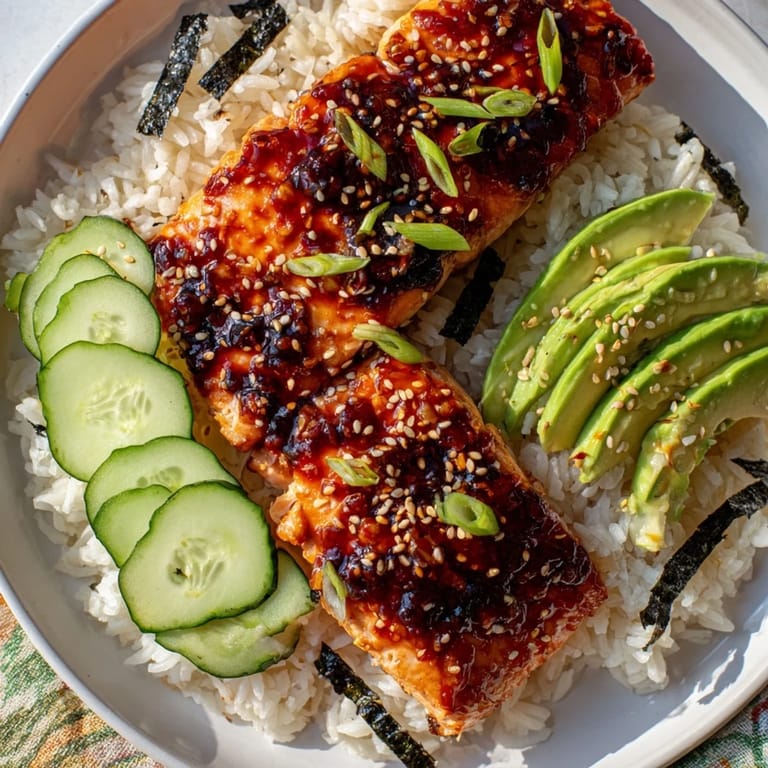
Save This bowl proves that restaurant-quality meals don't need complicated techniques or impossible ingredient lists. Make it once and you'll understand why it's become my default answer when someone asks what I'm cooking tonight.