 Save
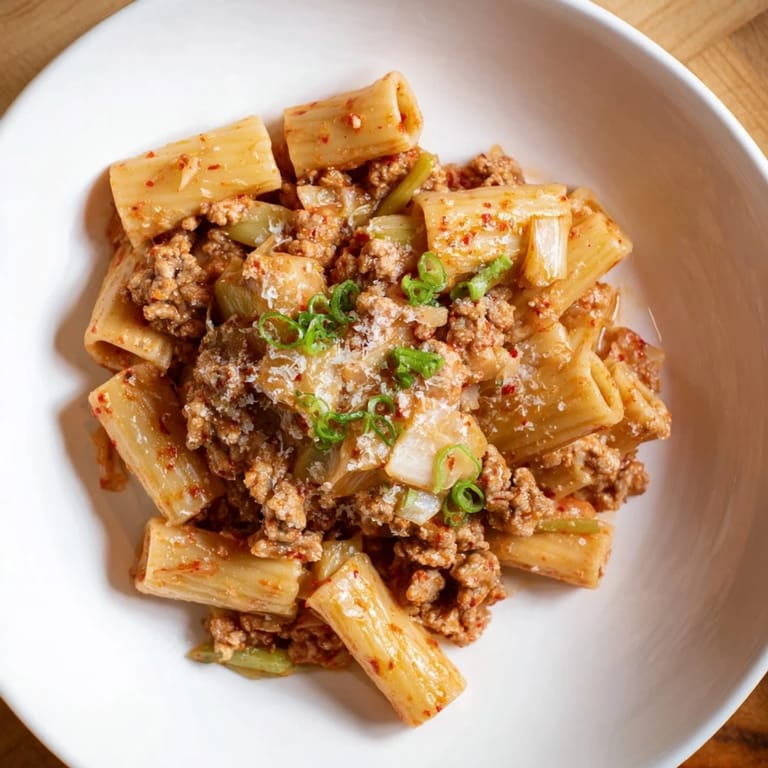
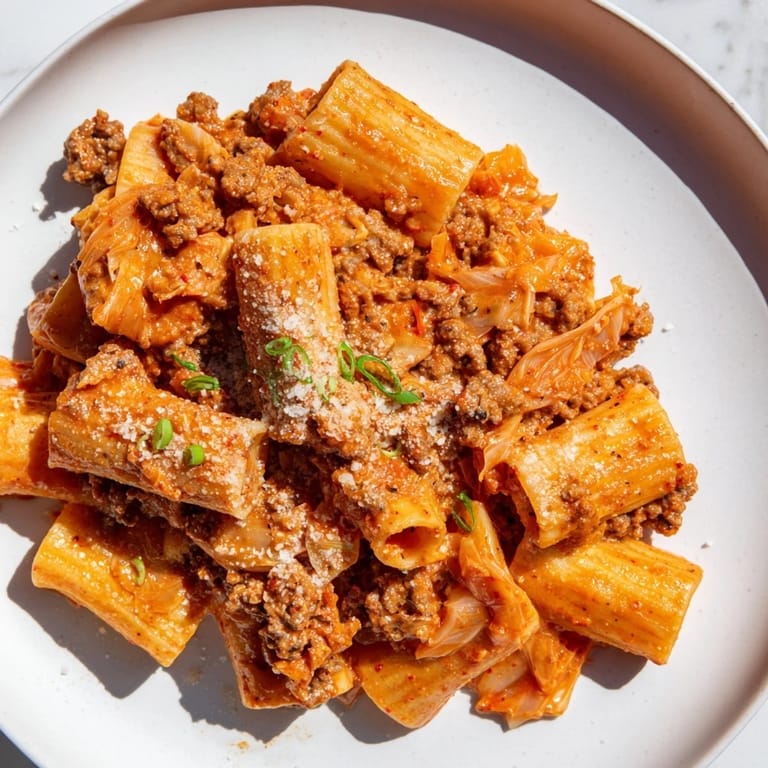
Save One rainy Tuesday, I stood in my kitchen staring at a jar of kimchi that was getting past its prime and a half-empty can of crushed tomatoes, wondering if I could somehow make them stop judging me from the pantry. What came out was equal parts accident and genius: a ragu that tasted like my Italian grandmother had a secret love affair with Seoul. The first time I tasted it, I actually laughed—spicy, creamy, umami-loaded pasta that made no sense on paper but everything on the palate.
I made this for my friend Marcus on a Thursday night when he was going through a rough patch, and watching his face light up at that first bite—the way he stopped mid-chew, confused but delighted—reminded me why cooking for people matters. He kept asking what was in it, convinced I was hiding some secret ingredient, which made the whole evening feel a little less heavy.
Ingredients
- Ground pork (300g): The backbone here; beef works too, or a blend if you want complexity without heaviness.
- Napa cabbage kimchi (200g, plus 2 tbsp juice): This is your flavor MVP—the funk, the heat, the soul of the dish, so choose one you actually like eating straight from the jar.
- Onion, garlic, carrot, celery (finely chopped): These build the base layer; take time with the knife work and you'll taste the difference.
- Crushed tomatoes (400g can): The bridge between Italian and Korean, mild-mannered and ready to play nice with everything else.
- Heavy cream (120ml): What transforms this from a meat sauce into something luxurious; plant-based alternatives work but won't quite have the same silkiness.
- Soy sauce (1 tbsp): A whisper of savory depth that ties the whole thing together.
- Gochugaru (1 tsp, optional): Extra heat if you want to lean harder into the Korean side; start with less if spice isn't your love language.
- Rigatoni or penne (350g): Tubes and ridges hold the sauce like little hands.
- Olive oil, sugar, salt, pepper: The quiet workers that make everything taste like itself.
- Scallions and Parmesan (for garnish): The final word, bright and sharp against all that creamy richness.
Tired of Takeout? 🥡
Get 10 meals you can make faster than delivery arrives. Seriously.
One email. No spam. Unsubscribe anytime.
Instructions
- Coax out the aromatics:
- Heat olive oil in your largest skillet over medium-high heat until it shimmers, then add onion, carrot, and celery all at once. You want them softened and starting to gold at the edges, about five minutes—this is where the ragu's foundation gets built, so don't rush.
- Wake up the garlic:
- Once the vegetables have released their sweetness, stir in minced garlic and cook just until the raw edge disappears, maybe a minute. If you go longer, it turns bitter and resentful.
- Brown the meat:
- Add ground pork and break it into small pieces with your wooden spoon as it cooks, six to seven minutes total. You want it fully cooked through but still have those little flecks that catch the heat and get slightly crispy.
- Introduce the kimchi:
- Stir in the chopped kimchi and all its juice—this is a marriage moment, and you want them integrated gently. Let it soften for three to four minutes, which mellows its raw edges and marries its funk into the meat.
- Build the sauce:
- Pour in the crushed tomatoes, soy sauce, optional gochugaru, sugar, and a pinch of salt and pepper. Bring to a simmer uncovered and let it bubble away for fifteen to twenty minutes, stirring occasionally, until it thickens into something that clings to a spoon.
- Cook the pasta separately:
- While the ragu simmers, bring a large pot of salted water to boil and cook your pasta until al dente according to package directions. Before draining, reserve a full cup of pasta water—this starchy liquid is your secret to silky sauce.
- Add the cream:
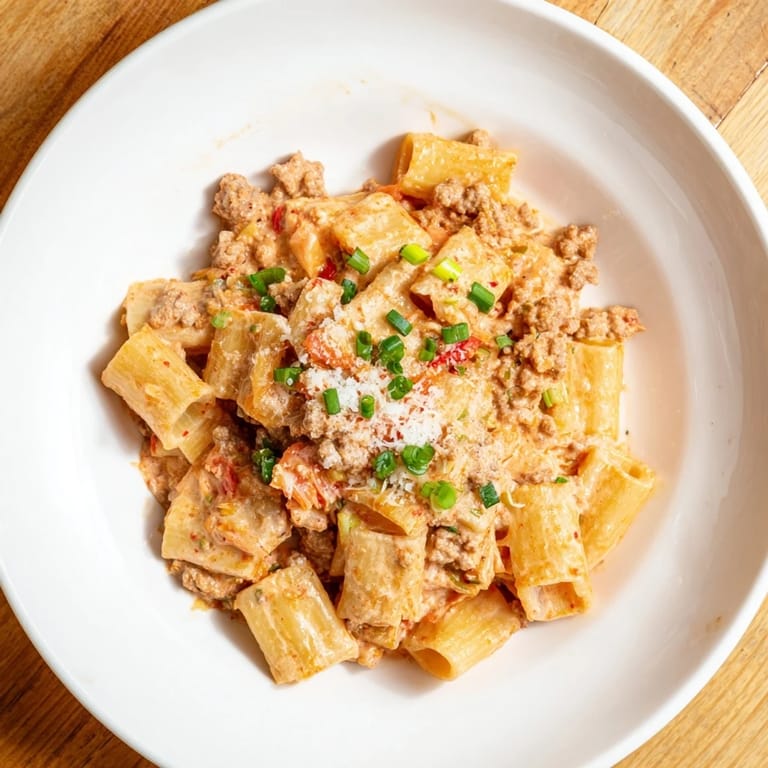
- Turn the ragu down to low heat, then pour in the heavy cream and half your reserved pasta water, stirring constantly until everything melts into a cohesive, luxurious sauce. Taste and adjust seasoning here; it might need more salt, a pinch of sugar, or a grind of black pepper.
- Marry pasta to sauce:
- Add your drained pasta directly to the ragu and toss until every strand is coated. If it feels too thick, loosen it with more pasta water until the sauce looks silky and moves with the pasta.
- Plate and finish:
- Divide into bowls, scatter scallions and grated Parmesan over the top if using, and taste one bite before serving—this is your last chance to whisper more seasoning into existence if needed.
 Save
Save There's a moment when you stir that cream into the ragu and everything shifts from separate players into a single chorus—the red deepens, the texture becomes glossy, and the smell of fermented cabbage and tomato and meat softens into something almost sweet. That's when you know it's going to be good.
When Heat and Richness Collide
This dish lives in that interesting space where Korean spice and Italian comfort don't fight—they amplify each other. The kimchi brings a complex, living heat that doesn't fade; the cream cools it just enough to make it accessible. This balance is why the dish works at all; if you're planning to make it, lean into that duality rather than pushing too hard in either direction.
Playing with Variations
The beauty here is that you can shift the dish without breaking it. Swap in beef for pork and suddenly it feels heartier. Use coconut cream instead of dairy and it takes on a subtle sweetness that Korean flavors actually understand. I've made it with ground lamb once and it transformed into something almost Middle Eastern, which nobody expected but everyone ate. The bones of the recipe are strong enough to hold plenty of interpretation.
Timing and Make-Ahead Magic
The whole thing takes an hour from cold to bowl, but the ragu actually improves if you make it in the morning and let it sit—the flavors marry and deepen, and reheating it with fresh pasta at dinner feels almost effortless. You can freeze the ragu for weeks, and it doesn't mind the cold. If you're cooking for guests, this is your secret: make the sauce the day before, cook the pasta fresh, and everyone thinks you've been slaving away when you've actually been sitting with a cup of tea.
- Freeze ragu in portions for instant future meals.
- Cook pasta fresh even if the sauce waits; the quality difference tastes like care.
- Let the finished dish rest two minutes before serving so the flavors settle into place.
 Save
Save This is the kind of recipe that makes you understand cooking is not about rules or traditions—it's about tasting something, understanding what it wants, and trusting yourself to follow. Make it once, then make it yours.
Kitchen Guide
- → How can I adjust the spice level?
Modify the amount of kimchi and gochugaru chili flakes to suit your heat preference. Reducing both will mellow the dish.
- → Can I make this dish dairy-free?
Yes, substitute heavy cream with unsweetened plant-based cream or coconut cream for a dairy-free, slightly sweet finish.
- → What pasta types work best?
Use rigatoni or penne for optimal sauce cling, but any tubular pasta cooked al dente will work well.
- → Is it possible to prepare a vegetarian version?
Use plant-based ground meat alternatives and omit or replace Parmesan with a vegan cheese to keep it plant-based.
- → How should I store leftovers?
Refrigerate in an airtight container for up to 3 days. Reheat gently with a splash of water or cream to restore creaminess.
- → What garnishes enhance the flavors?
Chopped scallions add freshness and mild onion notes, while grated Parmesan provides savoury richness.