 Save
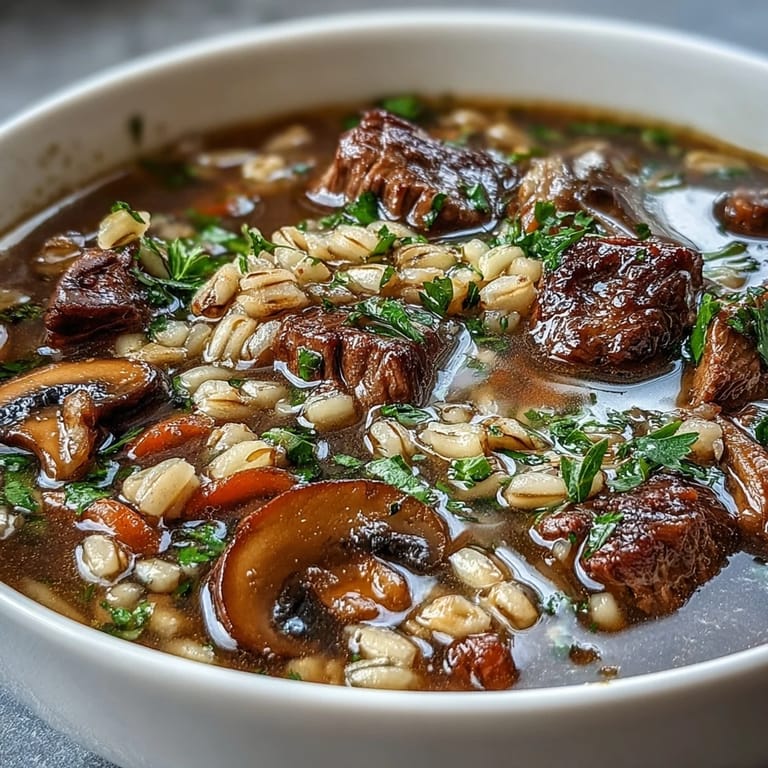
Save There's something about the sound of pancetta crisping in a pot that signals the beginning of something serious in the kitchen. I was home on a surprisingly cold October afternoon, the kind of weather that sneaks up on you, and I wanted soup that didn't apologize for being hearty. This beef and barley soup came together almost by accident, inspired by what was lingering in my pantry and a vague memory of a dish my neighbor mentioned. Three hours later, my kitchen smelled like a slow-cooked dream, and I understood why she'd been so enthusiastic.
I made this for my sister when she was going through a rough transition, and she sat at my kitchen counter while it simmered, just talking and occasionally stirring. When we finally tasted it, she said it was exactly what she needed—not fancy, just honest and warm. That's when I realized this soup had become less about the ingredients and more about the moment it created.
Ingredients
- Beef chuck roast: The cubes need to be roughly half-inch so they don't disappear into the broth, and chuck is perfect because it breaks down into tender strands rather than staying tough.
- Pancetta: This is your secret flavor weapon—it adds a smokiness that regular salt never could, and those rendered fat bits are liquid gold for the vegetables.
- Baby bella mushrooms: They're earthier than button mushrooms and have enough body to hold their shape through the long cooking, creating these little pockets of umami.
- Yellow onion, carrots, and celery: This holy trinity is your foundation, and dicing them similarly sized means everything cooks evenly without anything turning to mush.
- Pearl barley: Make sure to rinse it first—I learned this the hard way when I didn't and ended up with a slightly cloudy broth that wasn't quite as elegant.
- Beef broth: Low sodium is essential here because you're controlling the seasoning, not fighting against oversalted broth that makes everything taste the same.
- Tomato paste: Just a couple tablespoons deepen everything without making it taste tomatoey, almost like a secret that no one can quite identify.
- Bay leaves, thyme, and rosemary: These herbs are dried because we need them to survive the long simmer without falling apart or overwhelming the dish.
- Olive oil: Two tablespoons total—use it wisely, one for the pancetta and vegetables, one for searing the beef properly.
Tired of Takeout? 🥡
Get 10 meals you can make faster than delivery arrives. Seriously.
One email. No spam. Unsubscribe anytime.
Instructions
- Get your pancetta golden and crispy:
- Heat oil in your largest pot and let the pancetta render slowly, watching for the edges to curl and brown. You'll smell that savory smoke—that's your signal to pull it out, leaving behind those precious fat drippings that will carry flavor through everything else.
- Sear the beef in batches so it actually browns:
- This step matters more than you'd think; crowding the pot steams the meat instead of browning it, so be patient and work in two batches if you need to. The dark crust that forms is where all the deep, savory flavor comes from.
- Build the aromatics into a soft foundation:
- Once the beef is out, add the onion, carrots, and celery to that same pot, letting them soften in the remaining fat. After five minutes, add the garlic and let it bloom for just a minute—you want fragrant, not burned.
- Let the mushrooms release their liquid:
- Stir in the sliced mushrooms and let them cook undisturbed for a few minutes so they can brown rather than steam. Once they start to turn golden and release their moisture, you'll notice the broth becoming more savory and complex.
- Wake everything up with tomato paste:
- Stir in the tomato paste and cook it for a minute so it caramelizes slightly and loses that metallic edge. Then return the beef and pancetta, add the barley and herbs, and pour in the broth and water.
- Bring to a boil, then settle into a gentle simmer:
- Once it's bubbling, cover the pot and reduce the heat to low, letting it cook undisturbed for about ninety minutes. The barley will gradually soften, the beef will become impossibly tender, and the whole thing will smell like comfort incarnate.
- Finish and taste before serving:
- Remove the bay leaves, then taste and adjust the seasoning—you might need more salt or pepper depending on your broth. Ladle into bowls and finish with fresh parsley if you have it.
 Save
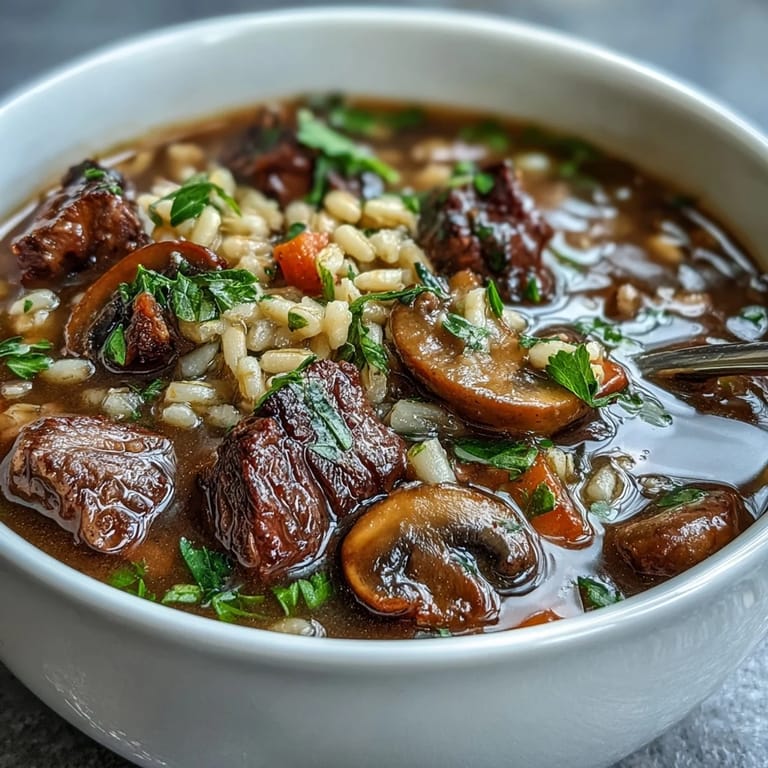
Save What surprised me most about this soup is how it transforms a regular Tuesday into something that feels intentional and nourishing. It's the kind of dish that teaches you patience without making you feel like you're waiting.
Why This Soup Works Year-Round
Most people think of this as a winter soup, and they're right—it's perfect for cold months when you want something substantial. But I've also served it on cool spring evenings and found it equally welcome, because what it really offers is comfort that doesn't depend on the season. It's substantial enough to be dinner on its own, but humble enough to pair with crusty bread or a simple salad without feeling like too much.
The Barley Secret
I used to think barley was just filler, something that made soup stretch further without adding anything special. Then I started paying attention to what it actually does—it softens into these tender little kernels that absorb the broth and create an almost creamy texture without any cream. It's a quiet ingredient that does the heavy lifting, and once you notice it, you'll start adding barley to other soups intentionally.
Making It Your Own
This is the kind of recipe that handles changes gracefully, which is partly why I keep making it. A splash of red wine instead of some of the broth makes it more elegant, and a handful of fresh spinach stirred in at the end adds brightness without much effort. The bones of the recipe stay solid while the details shift based on what you have and what you're in the mood for.
- If you find the soup too thin after cooking, you can mash some of the cooked vegetables against the side of the pot to thicken it naturally.
- Pancetta can be swapped for bacon, though the flavor will be slightly different and you might need a pinch more salt.
- Make a big batch and freeze it in portions—it reheats beautifully and actually tastes richer after a day or two in the fridge.
 Save
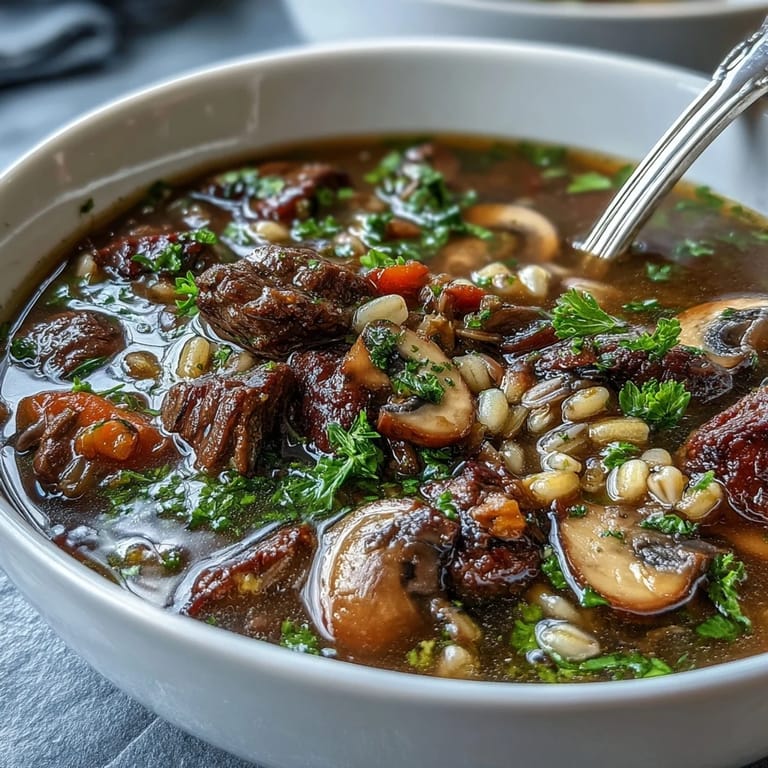
Save This soup reminds me that the simplest meals often become the most meaningful ones. Make it once, and you'll probably make it again.
Kitchen Guide
- → How long does beef barley soup need to simmer?
Simmer for about 1.5 hours to ensure the beef becomes tender and the pearl barley is fully cooked and creamy.
- → Can I make this ahead of time?
Absolutely—the flavors actually improve after a day in the refrigerator as the ingredients continue to meld together.
- → What cut of beef works best?
Beef chuck roast is ideal because it becomes tender and flavorful during long simmering, though stew meat can also work well.
- → Is this soup gluten-free?
Traditional pearl barley contains gluten, but you can substitute brown rice or other gluten-free grains with adjusted cooking time.
- → What can I use instead of pancetta?
Bacon makes an excellent substitute if you don't have pancetta—just dice it and cook until crispy before proceeding.
- → How do I store leftovers?
Keep in an airtight container in the refrigerator for up to 4 days, or freeze for up to 3 months.