 Save
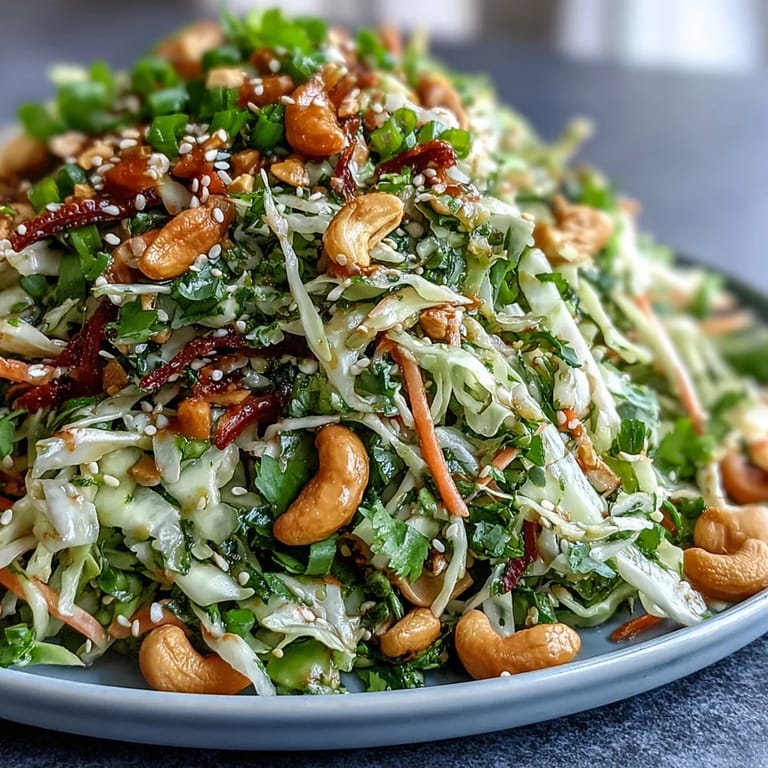
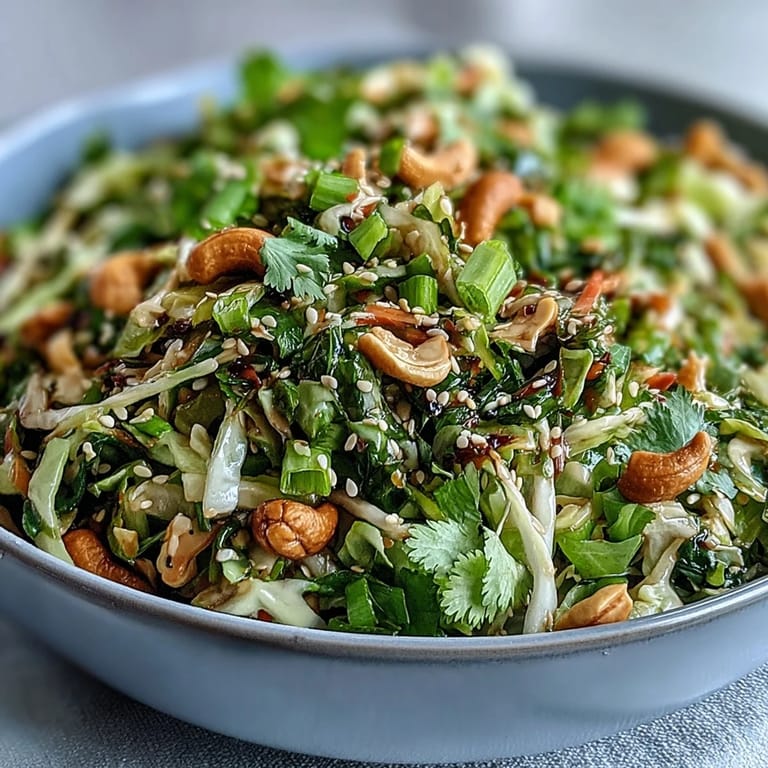
Save My neighbor showed up one summer afternoon with a container of this salad, still cold from her kitchen, and I took one bite standing by the fence and understood immediately why she'd been raving about it all week. The crunch was almost aggressive in the best way, and that ginger-sesame dressing seemed to wake up every taste bud I'd forgotten I had. She laughed when I asked for the recipe right then and there, wiping vinegar from my chin. Since then, I've made it dozens of times, and it's become the thing I bring to potlucks when I want people to actually remember what I contributed.
I once made this for a dinner party where everything else fell apart—the roasted chicken took forever, the rice burned slightly on the bottom—but this salad sat there looking gorgeous and tasting perfect, and honestly, nobody even noticed the other disasters. It became my secret weapon: the one thing I could guarantee would turn out beautifully, no matter what else was happening in the kitchen.
Ingredients
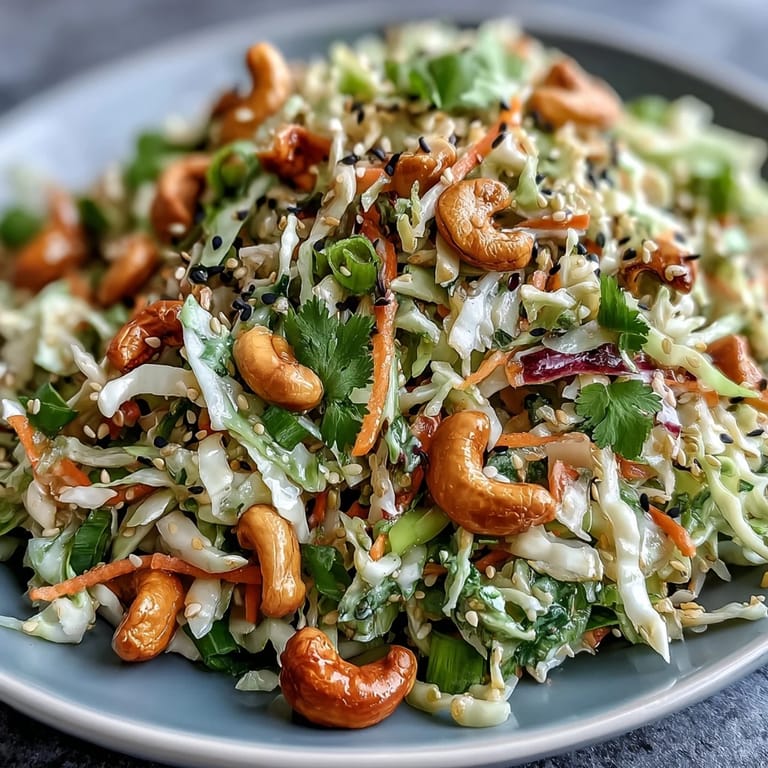
- Green and red cabbage (6 cups total, shredded): The two colors create visual excitement, and combining them gives you the sweetness of red with the crisp, slightly peppery bite of green.
- Carrot (1 medium, julienned): The natural sweetness here acts as a gentle counterpoint to the sharpness of the ginger and vinegar.
- Green onions (3, thinly sliced): These bring a fresh, almost floral note that prevents the salad from feeling heavy.
- Fresh cilantro (1/2 cup, chopped): Don't skip this—it ties everything together with a brightness that makes people ask what the secret ingredient is.
- Toasted sesame oil (3 tablespoons): Use the good stuff here; this is where the depth comes from, and it makes or breaks the whole dressing.
- Rice vinegar (2 tablespoons): Milder and slightly sweet compared to other vinegars, which keeps the dressing from being too aggressive.
- Soy sauce or tamari (1 tablespoon): This adds umami and saltiness, so taste as you go and adjust if needed.
- Lime juice (1 tablespoon, fresh): Bottled just doesn't have the same brightness, so squeeze it fresh if you can.
- Honey or maple syrup (1 tablespoon): A touch of sweetness rounds out the sharp edges and creates balance.
- Ginger (1 tablespoon, freshly grated): Pre-grated loses its punch, so grate it yourself just before mixing the dressing.
- Garlic (1 clove, minced): One is enough; you want ginger and sesame to be the stars, not garlic overpower.
- Roasted cashews or peanuts (1/3 cup, roughly chopped): The crunch texture is essential, so don't skip this or use raw nuts—toasted ones make all the difference.
- Toasted sesame seeds (2 tablespoons): Sprinkle these right before serving so they stay crispy and don't get lost in the dressing.
Tired of Takeout? 🥡
Get 10 meals you can make faster than delivery arrives. Seriously.
One email. No spam. Unsubscribe anytime.
Instructions
- Prep your vegetables like you're building a salad, not just chopping:
- Shred the cabbage, julienne the carrot, slice the green onions on the bias, and chop the cilantro roughly—each vegetable should have its own moment to shine in the final dish. This takes about 10 minutes, and the rhythm of chopping is honestly half the fun.
- Build the dressing in a jar so you can shake it like you mean it:
- Combine the sesame oil, rice vinegar, soy sauce, lime juice, honey, ginger, garlic, and sriracha if using. Seal the jar and shake for about 30 seconds until everything is emulsified and the honey dissolves.
- Toss the vegetables with confidence:
- Pour the dressing over your cabbage mixture and toss like you're tossing a salad you believe in—use your hands if you want, there's no shame in it. Make sure every strand of cabbage gets coated, which usually takes about a minute of real effort.
- Add the crunch at the last possible moment:
- Stir in the chopped nuts and sesame seeds just before serving, because once they get soaked in dressing, they start to soften and lose their character. If you're making this ahead, keep the nuts and seeds separate and add them right when you plate it.
- Decide on timing based on your texture preference:
- Serve it immediately if you want maximum crunch, or let it sit for up to 2 hours in the refrigerator if you prefer softer vegetables and more melded flavors—both are delicious, just different.
 Save
Save There was a moment when my daughter, who had been resistant to vegetables, asked for seconds of this salad and then asked if we could make it again the next week. It wasn't a dramatic conversion or anything, but it felt like the salad had done something quiet and important, sneaking nutrition and brightness past her usual skepticism.
Why This Salad Works with Everything
The magic of this salad is that it doesn't demand to be the center of attention—it slides beside grilled chicken, noodles, or rice and somehow makes those things taste better. The acid from the vinegar and lime cuts through richness, the sesame oil adds nuttiness that plays well with Asian-inspired mains, and the ginger brings a warmth that ties everything together. I've served it cold, at room temperature, and even slightly warm, and it adapts beautifully to each scenario.
Making It Your Own
One of the best parts about this recipe is how forgiving it is to customization. I've added snap peas for extra crunch, tossed in shredded daikon radish when I had it, and once threw in some toasted buckwheat groats because I was experimenting. The base is strong enough that small additions feel like they're enhancing rather than disrupting.
Storage and Serving Thoughts
This salad is best served the same day you make it, but the dressing and vegetables can be prepared separately up to a day ahead, stored in separate containers, and combined right before serving. If you do have leftovers and they've gotten soft, you can actually refresh them by adding a splash of fresh lime juice and a few new toasted nuts to bring back some texture. Here are a few final thoughts to keep in mind:
- Keep the nuts and seeds separate if you're storing this for more than an hour—add them just before serving.
- If you're making this nut-free, double the sesame seeds and add some toasted pumpkin seeds or sunflower seeds for that textural element.
- The dressing is strong, so if you're scaling this recipe down, reduce the dressing slightly to avoid overwhelming a smaller batch.
 Save
Save This salad has become one of those recipes I reach for when I want to feel competent in the kitchen without much effort, and when I want to feed people something that tastes both comforting and exciting. Make it once and it'll probably become one of yours too.
Kitchen Guide
- → Can I make this salad ahead of time?
You can prepare the vegetables and dressing separately up to 24 hours in advance. Toss them together just before serving to maintain maximum crunch, or combine and refrigerate for up to 2 hours if you prefer slightly softened cabbage.
- → What can I substitute for rice vinegar?
Apple cider vinegar works well as a substitute for rice vinegar. You can also use white wine vinegar or a mild white vinegar, though the flavor profile will be slightly different.
- → How do I make this salad nut-free?
Simply omit the cashews or peanuts and increase the toasted sesame seeds to 1/4 cup for added texture and flavor. You can also add roasted sunflower seeds or pumpkin seeds as alternatives.
- → Can I add protein to make this a main dish?
Absolutely! Top the salad with grilled chicken, shrimp, tofu, or edamame to transform it into a satisfying main course. Shredded rotisserie chicken is also a convenient option.
- → What other vegetables can I add?
Bell peppers, snap peas, edamame, cucumber, or radishes all work beautifully in this salad. Thinly sliced snow peas or shredded Brussels sprouts also add wonderful texture and flavor.
- → How long will leftovers keep?
The dressed salad will keep refrigerated for up to 2 days, though the cabbage will soften over time. For best results, store the dressing separately and toss just before serving if making ahead.